Forty Thousand Fans, Zero Recognition at the Grocery Store
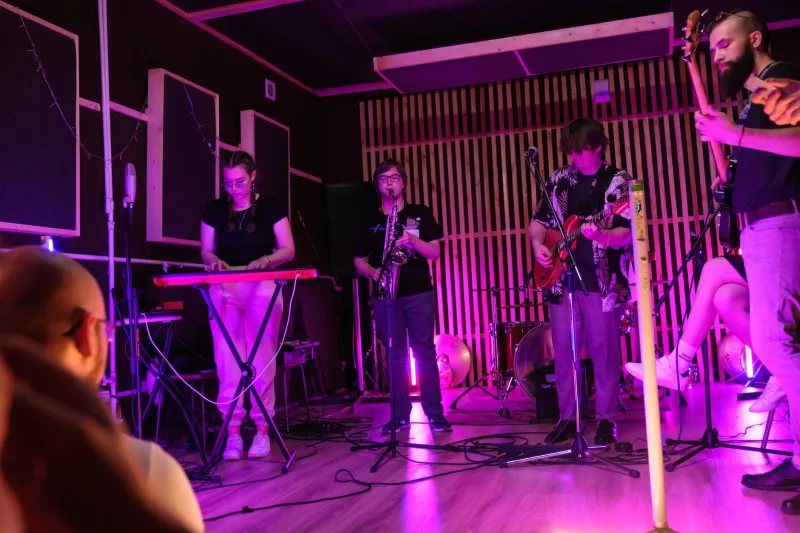
Dana Whitfield played to a sold-out room of 600 people in Nashville on a Saturday night. On Sunday, a cashier at her local Kroger complimented her haircut, having no idea who she was.
She wouldn't have it any other way.
Whitfield is what you might call a weekend celebrity — one of a growing class of creators, podcasters, and regional musicians who are genuinely, financially famous to a specific slice of the internet and completely invisible to everyone else. Her true-crime-adjacent storytelling podcast pulls a few hundred thousand downloads a month. Her Patreon clears five figures annually. She's recognized at industry conventions and occasionally at airport gates in cities where her tour stops.
"My neighbor thinks I do, like, data entry," she laughs. "Meanwhile I just got recognized in a bathroom in Portland."
The Math of Being Medium Famous
Here's the contrarian case Whitfield and her peers are quietly making: chasing a million followers might be the worst business plan on the internet.
The mega-follower path is a lottery with venture-capital overhead — constant posting, algorithmic hostage-taking, brand deals that evaporate, and an audience so broad it's shallow. A million followers might convert to a few thousand true buyers. The economics only work for the top fraction of a percent.
The micro-celebrity model flips that. Forty thousand people who actually care — who buy tickets, subscribe on Patreon, and show up — is a real small business. It's the old economics of the regional touring act or the local radio DJ, rebuilt on the internet. Deep beats wide.
Consider the numbers. A niche podcaster with 40,000 dedicated listeners can charge more per sponsor spot than a generalist with ten times the audience, because niche audiences actually buy what's advertised. A musician with a devoted regional following can gross more per year than a Spotify-viral artist with millions of passive streams and no tour base.
Three Flavors of Small Fame
We spoke with three people living this model, and their playbooks differ in the details but rhyme in the structure.
Whitfield, the podcaster, treats her audience like a membership, not a metric. Live shows, Discord hangouts, merch drops that feel like inside jokes. "I'm not trying to be for everyone," she says. "I'm trying to be un-skippable for my people."
Marcus Oyelaran is a jazz-adjacent bandleader in Chicago who built his following the slow way — residencies, festival slots, a cult-favorite EP. His crowd skews local and loyal. "I know faces," he says. "I know names. When we play the Green Mill, it's half congregation, half concert." He clears more per show than friends signed to labels.
And then there's Bex Tanaka, a woodworking YouTuber with 90,000 subscribers — tiny by platform standards — whose furniture plans sell at prices that would've seemed absurd to a hobbyist a decade ago. "My audience is contractors and serious hobbyists," she says. "They don't need me to be famous. They need me to be right."
The Cost of Being Known Just Enough
Micro-celebrity isn't frictionless. There's the income volatility, the constant content treadmill, and the strange emotional limbo of being recognized by strangers in one context and not another. Tanaka describes meeting a subscriber at a hardware store and freezing — unsure whether to be a person or a brand.
But ask any of them whether they'd trade for a shot at mass fame, and the answer is a fast, almost suspicious no.
"Famous people can't go anywhere," Whitfield points out. "I can go anywhere. I just happen to get paid like someone who can't."
There's a lesson in that for anyone building an audience in 2025: the internet finally made it possible to be a big fish in a pond of your own choosing — and for a lot of people, that pond pays better than the ocean ever did.