Four Shows, Zero Tickets: One Fan's Tour Through America's Worst Checkout Experience
Somewhere between the third 'you are in line' screen and the fourth 'we're sorry, tickets are no longer available' message, Maya Ortiz started keeping a spreadsheet.
Not for her finances. For her sanity.
A 27-year-old nurse from Columbus, Ortiz wanted to see four artists this year — a stadium juggernaut, a mid-size indie act, a legacy rock band, and a comedian she's followed since college. Four shows. Four on-sales. Four chances to experience what buying a concert ticket has become in America: a competitive event with worse odds than a raffle and a user interface designed by someone who hates you.
Her final tally, which we verified: roughly $1,340 spent, 11 hours of cumulative waiting, one identity verification loop that required photographing her driver's license at 9:58 a.m. on a Tuesday, and one show she simply gave up on attending.
"I have a harder time getting tickets than my brother had getting a mortgage," she told us. "That's not a joke. He closed in three weeks."
The Queue Is the Product
Here's the thing about modern ticket on-sales: the waiting room isn't a bottleneck. It's the business model.
When you join a queue, you're not just waiting your turn — you're entering an auction. Dynamic pricing means the price you see at 10:00 a.m. may not be the price at 10:04. Demand-based algorithms watch the frenzy and adjust in real time, so the faster everyone rushes, the more everyone pays. It's a system where urgency itself is monetized.
And the queues aren't empty. Bots and professional resellers plow through on-sales with speed no human thumb can match, scooping up inventory that reappears minutes later on resale platforms at triple the face value. The anti-bot measures? Mostly they slow down actual fans. The bots, by most credible accounts, are doing fine.
Ortiz's spreadsheet logs her stadium show experience in one line: "Queue position 41,000. Face value gone in 6 minutes. Cheapest verified resale: $312 for a seat behind the stage."
She paid it. Of course she paid it.
A Game You Can't Win, But Must Play
What makes ticket buying uniquely demoralizing isn't just the cost — it's the illusion of fairness wrapped around it.
Verified fan presales. Fan club codes. Credit card holder windows. Each one promises a leg up, and each one just shuffles who's in line ahead of you. The lottery-adjacent mechanics — register now, maybe get access — have turned fandom into a slot machine. You don't buy tickets anymore; you're selected to be permitted to attempt to purchase them.
Economists have a term for what's happening: the market is clearing, just not in the box office. The gap between face value and market value doesn't disappear — it leaks into resale, fees, and platinum tiers. The artist gets paid, the platform gets paid, the reseller gets paid. The fan, as always, pays.
The Emotional Receipt
Ask Ortiz what the worst part was, and she doesn't say the money.
"It's the adrenaline dump," she says. "Your heart's pounding, you're refreshing, your hands are shaking — and then you either pay $300 or you get nothing. There's no in-between. It's a heist with extra steps."
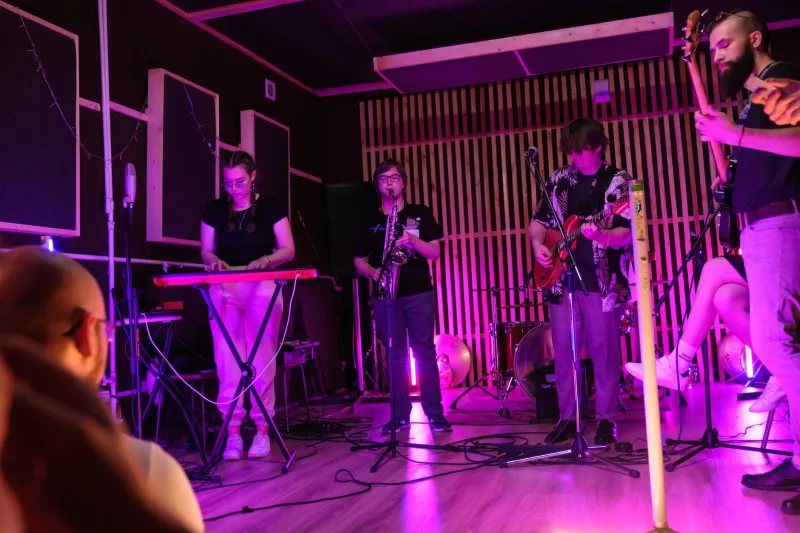
Her indie show, by contrast, cost $38 face value and took four minutes. Her comedian? A comedy club with a two-drink minimum — $65 total, no queue, no drama. The pattern isn't subtle: the smaller the venue, the saner the system.
Which raises the obvious question. If the big rooms have become casinos, why keep playing?
Ortiz shrugs. "Because the show's the show. That part never disappoints. It's everything around it that's broken."
She's already registered for next year's presales. The spreadsheet has new tabs.
That's the gold rush in miniature: everyone knows the game is rigged, everyone knows the house wins, and everyone shows up anyway. Because the alternative — missing the moment, sitting out the memory — costs more than any service fee ever could.