We Used to Watch Together. Now We Just Watch.
There was a night in 1983 when 106 million Americans watched the finale of M*A*S*H. Not 106 million people who had it in their queue. Not 106 million who eventually got around to it over the following weeks. One hundred and six million people, at the same time, watching the same thing, knowing that everyone else was watching too. That shared experience — the awareness that you were part of something collective — was its own layer of the event.
We will probably never have a moment like that again. And the loss is bigger than the ratings number suggests.
The Architecture of Shared Culture
For most of the 20th century, American cultural life was built on scarcity. There were three networks. Movies opened on a Friday and ran for weeks. An album dropped and everyone heard it at more or less the same time on the same radio stations. Concert tours were actual events — a band came through your city once, maybe twice, and if you missed it, you missed it.
This scarcity wasn't just a logistical reality. It was the structural foundation of how people connected around culture. You watched the Super Bowl halftime show because everyone was watching it. You saw the summer blockbuster opening weekend because the conversation was happening right now and you wanted in. You stayed up for a late-night talk show appearance because there was no other way to see it. The temporal constraint created a shared reference point, and shared reference points are one of the basic building blocks of social connection.
Then the infrastructure changed. And the social architecture built on top of it started crumbling, quietly, in ways we're only now beginning to fully measure.
The Personalization Bargain
The deal that streaming and algorithmic platforms offered was genuinely appealing: no more watching things you don't care about, no more being stuck with the schedule, no more sitting through an ad for something irrelevant to you. Total control over your entertainment experience. Your own personal channel, tuned exactly to your preferences, available any time.
What wasn't in the brochure was what you'd be trading away. When everyone gets their own perfectly curated experience, the overlap between experiences shrinks. And the overlap is where conversation happens. It's where the Monday morning recap lives, where the "did you see" text comes from, where the spontaneous connection between strangers at a bar gets sparked.
The data on this is starting to come into focus. A 2023 survey found that nearly 40% of Americans said they rarely or never discuss TV shows with friends or coworkers because they're rarely watching the same things. The monoculture is gone — and with it, a significant portion of the low-stakes social glue that used to hold casual relationships together.
What the Movie Theater Was Actually For
The decline of movie theater attendance gets discussed almost entirely as a business story — box office numbers, streaming competition, the economics of the multiplex. But the more interesting story is cultural. The movie theater wasn't just a delivery mechanism for film. It was a communal ritual.
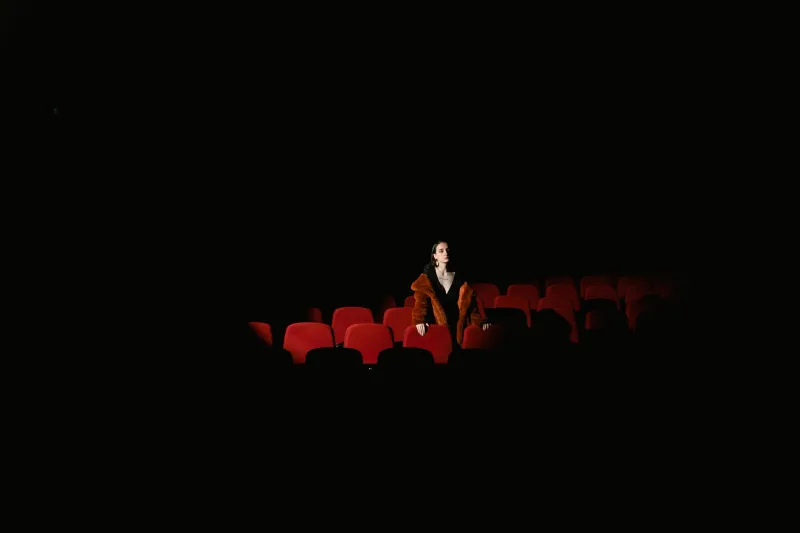
You went with people. You sat in the dark with strangers. You laughed at the same moments, jumped at the same scares, felt the same swell of a score in a room full of other humans. That collective sensory experience is neurologically distinct from watching the same movie alone on your couch. Research on shared experience consistently shows that doing things simultaneously with others — even strangers — amplifies the emotional response and creates a sense of social connection, even without direct interaction.
The streaming platform can deliver the content. It cannot deliver that. And increasingly, it's the only option available in a lot of markets where theaters have closed or consolidated to the point of inaccessibility.
The 'Community' Feature Is Not a Community
Here's where the platforms will push back: they have community features. Discord servers. Comment sections. "Watch parties." Subreddits. The argument is that digital community has replaced physical or temporal community — same connection, different medium.
This argument is, at best, partially true and mostly convenient. Online fan communities around specific shows or artists are real and can generate genuine connection. But they're also self-selecting in a way that shared cultural moments never were. The M*A*S*H finale wasn't watched by M*A*S*H fans. It was watched by Americans. The shared experience crossed demographic lines, created unexpected common ground, gave people something to talk about with their neighbor, their coworker, their uncle at Thanksgiving.
The Discord server for your favorite niche sci-fi show is full of people who are already a lot like you. That's comfortable, but it's a different social function entirely. The cross-demographic, low-stakes cultural conversation — the kind that used to happen naturally when everyone was watching the same three channels — doesn't have a digital replacement. The apps keep adding features, but they're optimizing for engagement within your existing preferences, not for the accidental connection that happens when culture is shared rather than sorted.
The Concert That Became Content
Live music is an interesting case study because it's one of the few entertainment formats that has actually grown in the streaming era — and the reasons why are telling. Concert ticket sales have exploded precisely because live performance offers something the algorithm cannot replicate: the irreducibly shared, in-person, time-specific experience. You are there. Other people are there. It is happening right now and it will not happen exactly this way again.
But even here, the personalization instinct is creeping in. The rise of the phone-at-concert culture, where a significant portion of the audience is experiencing the show through a four-inch screen in order to create content, is a symptom of the same disease. The event becomes material. The shared moment becomes individual output. You were there, technically, but you were also producing a solo artifact for your own feed the entire time.
The artists who've pushed back on this — demanding phone-free shows, bags and cases — aren't being precious. They're trying to preserve the one thing that makes a live show different from a YouTube video: the fact that you're actually in it, together, present.
The Loneliness Is Not Incidental
The US surgeon general declared loneliness a public health epidemic in 2023. The timing isn't a coincidence. The same decade that brought us infinite personalized content also brought us measurable declines in the number of close friends Americans report having, in participation in community institutions, in the casual social contact that used to happen naturally in shared public spaces and shared cultural moments.
Entertainment didn't cause the loneliness epidemic. But the shift from communal to individualized consumption removed one of the quieter, more consistent mechanisms through which people maintained social connection — the shared reference, the common experience, the thing everyone saw that gave you something to say to someone you didn't know very well.
The algorithm gave us everything we wanted and nothing we needed. We got perfect content and lost the reason we were watching in the first place.