Dead Tech Rising: Why Young People Are Ditching Smartphones for Their Parents' Junk Drawer
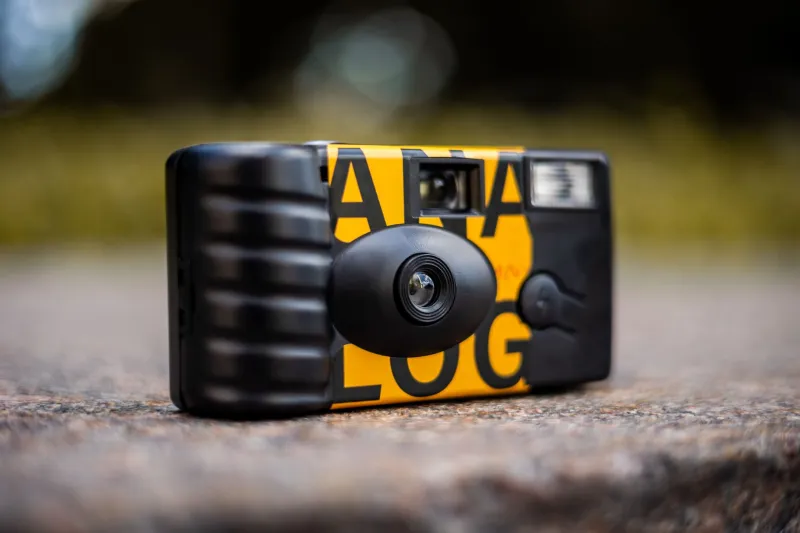
There's a Motorola Razr sitting on a shelf at a vintage shop in Brooklyn, priced at $85, and it's been sold twice in the last month. In Austin, a college student is shaking a disposable camera out of a CVS bag, excited about pictures she won't see for two weeks. In suburban Ohio, a 19-year-old is writing an email newsletter that goes out every Thursday — by hand, essentially, with no algorithm to boost it, no For You Page to surface it, just a list of people who signed up because they wanted to.
Something is happening at the edges of digital culture, and it's weirder and more interesting than the think pieces are giving it credit for.
The Graveyard That Came Back to Life
Let's run the list. Disposable cameras — the kind your parents used at beach vacations and proms — are having a genuine commercial renaissance. Fujifilm reported significant upticks in single-use camera sales in the US over the past few years, driven almost entirely by younger buyers. Physical photo albums, not just as vintage décor but as actual functional objects people are putting pictures in, are back in craft stores and on TikTok tutorials. Vinyl records have now outsold CDs for three consecutive years. Film photography communities on Reddit are growing. And perhaps most surprisingly, the email newsletter has become one of the most coveted formats for young independent writers and creators — a format that existed before most of them were born and that corporate media spent years declaring obsolete.
Flip phones — not the new folding smartphone kind, but actual dumb phones with T9 texting and snake — are being sought out on eBay and at estate sales. There's even a small but vocal community of people who've switched to "light phones," stripped-down devices that do almost nothing by design.
None of this is accidental.
The Burnout Is Real
To understand why a generation raised on smartphones is reaching for flip phones, you have to take the digital burnout conversation seriously — not as a wellness buzzword, but as a genuine cultural shift. These are people who grew up with infinite content availability, social metrics attached to their self-worth, and the constant low-grade anxiety of a notification system designed by behavioral psychologists to be impossible to ignore.
The research is pretty bleak. Rates of anxiety and depression among Gen Z are higher than any previously measured generation. Screen time averages in the US hover around seven hours a day for adults and are higher for teens. The attention economy has delivered on its promise of total capture, and a growing number of people are starting to feel like the fish that finally noticed the water.
Analog formats offer something that digital formats structurally cannot: a natural endpoint. A disposable camera has 27 shots. A vinyl record has two sides. A printed photo album doesn't send you a push notification. These aren't bugs — they're the entire point. The constraint is the product.
Is It Real or Is It Aesthetic?
Here's where it gets complicated. Because for every person genuinely detoxing from digital life with a dumb phone and a darkroom hobby, there are ten people posting their disposable camera photos to Instagram the moment they get them developed. The analog revival has its own TikTok hashtags. The "film photography" community is enormous on a platform built around algorithmic video consumption. The newsletter renaissance is tracked and discussed on Twitter.
The nostalgia for analog isn't happening outside the digital ecosystem — it's happening inside it. And that's not necessarily hypocrisy; it's just the reality of how culture moves now. Everything gets absorbed, aestheticized, and recirculated. The question is whether something real survives the absorption.
And in this case, the answer might actually be yes — at least partially. The people who stick with disposable cameras past the first aesthetic phase, who actually develop the photos and put them in albums, who keep writing their newsletters even when the subscriber count is small — they're finding something that digital convenience genuinely doesn't offer. Patience. Permanence. The experience of waiting for something.
What 'Obsolete' Actually Means
One of the more interesting things about this trend is what it reveals about how we define obsolescence. We tend to call a technology dead when it loses market dominance. But market dominance and human value aren't the same thing. Typewriters never stopped being good writing tools — they just stopped being the most efficient ones. Handwritten letters never stopped being meaningful — they just stopped being practical at scale.
Gen Z isn't discovering that these formats are good. They're rediscovering it, with fresh eyes, in a context where the contrast with digital life makes the old qualities more visible. A photo you had to wait two weeks for is a different object than one you took and filtered in thirty seconds. Not better in every way — but different in ways that matter.
The formats aren't coming back because they're superior. They're coming back because they're different from the default, and the default has become suffocating enough that different feels like relief.
The Aesthetic Trap
The risk, of course, is that the whole thing collapses into pure consumption. "Analog aesthetic" is already a thriving commercial category. VSCO filters that simulate film grain. Phone cases designed to look like Razrs. Mass-produced "vintage" photo albums at HomeGoods. The market is very good at identifying a genuine cultural hunger and selling you a simulacrum of it that doesn't require any actual change in behavior.
If the nostalgia for analog formats gets fully digested into a visual style — something you perform rather than something you practice — then it becomes another layer of the same digital content machine. Another aesthetic to cycle through before the algorithm decides you're over it.
The people who seem to be getting something real out of this aren't the ones buying the aesthetic. They're the ones accepting the inconvenience — the two-week wait, the T9 keyboard, the newsletter that nobody retweets. The friction is the feature. The moment you remove the friction to make it more shareable, you've lost the thing you were actually looking for.
What It's Really About
At its core, this isn't really about technology. It's about agency. The appeal of a 27-exposure camera isn't the grain or the warm tones — it's the fact that it makes you choose. You get 27 shots. You have to decide what's worth one of them. That decision-making, that sense of authorship over your own attention, is exactly what the infinite scroll has systematically removed.
Gen Z didn't invent the desire for a tangible, finite, human-scaled life. They're just the first generation to grow up without one and have to go looking for it on eBay.