Realness for Sale: How 'Being Yourself' Online Became the Biggest Hustle of All
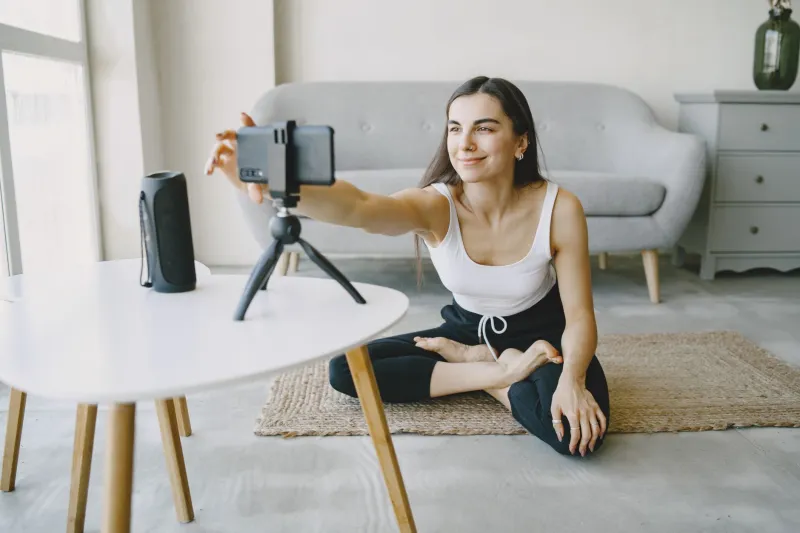
There's a particular kind of video that dominates your For You page right now. The lighting is deliberately imperfect — warm but not staged. The creator is mid-sentence when the clip begins, like you walked in on a private thought. They pause, look slightly to the left, then back at the camera with a confession that feels ripped straight from a journal. You trust them immediately. You share it. You defend them in the comments when someone calls it fake.
Here's the uncomfortable truth: that hesitation was rehearsed. The lighting took forty-five minutes to set up. And the "journal entry" was A/B tested across three drafts.
Welcome to the authenticity industrial complex — where being real is the most meticulously engineered product on the market.
The Algorithm Didn't Want Stars. It Wanted Neighbors.
To understand how we got here, you have to go back to what platforms actually reward. YouTube, TikTok, and Instagram didn't build their engagement systems to favor polished productions. They built them to favor connection — the parasocial gut-punch of feeling like someone is talking directly to you. Early data showed that shaky handheld footage outperformed studio-quality content in watch time. Vulnerability drove comments. Imperfection drove shares.
Creators noticed. Brands noticed. And then something predictable happened: the formula got reverse-engineered.
By the mid-2010s, "authentic" content had its own aesthetic rulebook. Messy buns. Unedited skin. The "okay but real talk" opener. The strategic pause before a hard truth. These weren't accidents — they were signals, a visual vocabulary that told audiences this person is safe, this person is like you, this person isn't selling anything. Except, of course, they almost always were.
The Playbook Nobody Admits Exists
Ask any mid-tier lifestyle creator off the record and they'll tell you the same thing: there's a template, and straying from it tanks your numbers.
It usually goes something like this. Lead with a relatable struggle — something universal but specific enough to feel personal (burnout, body image, relationship anxiety). Resist the urge to resolve it too quickly. Let the audience sit in the discomfort with you. Then pivot to a moment of clarity that doesn't feel like an answer but like a conversation. Close with something unresolved, something that invites the audience back.
Sound familiar? It should. It's basically the three-act structure of a prestige TV episode, dressed in an oversized hoodie.
The irony is suffocating. The pursuit of anti-performance has produced one of the most codified performance styles in the history of media. What started as a genuine rejection of Hollywood gloss has calcified into its own genre, complete with tropes, archetypes, and unwritten rules that creators violate at their financial peril.
The Psychological Tax
Here's where it gets genuinely complicated — and genuinely sad.
Not every creator starts out cynically manufacturing vulnerability. Many of them stumble into the formula organically, posting something raw and getting rewarded for it. The platform applauds. The followers multiply. And then a slow, almost imperceptible pressure begins: do that again. More of that. Dig deeper.
Psychologists who work with content creators describe something they call "identity erosion" — a gradual blurring between the performed self and the actual self. When you've posted your anxiety for long enough, you start to lose track of which parts of your anxiety are real and which parts are content. When your breakdowns get more engagement than your breakthroughs, you start unconsciously framing your life through the lens of what's postable.
Several creators who've stepped back from major platforms in recent years — a pattern that's become its own trending genre, naturally — have described the experience in strikingly similar terms. The platform doesn't just want your content. It wants your interior life, rationed out in digestible, emotionally resonant portions, on a consistent upload schedule.
That's not a creative career. That's something closer to a subscription service where the product is your actual psychological experience.
When the Audience Becomes the Enforcer
What makes the authenticity trap especially vicious is that the audience isn't a passive victim in this system — they're part of the mechanism.
Followers develop deep ownership over the creators they invest in. They learn the creator's cadence, their tells, their energy. And when something feels "off" — when a sponsored post breaks the spell, or a creator's tone shifts after signing with a management company — the audience pushes back hard. Comments flood in. "You've changed." "This feels fake." "Bring back the old you."
The old you, of course, was also a performance. Just an earlier, rawer version of it.
This creates a feedback loop that traps creators between two impossible demands: the platform wants optimization, and the audience wants the illusion that no optimization is happening. Threading that needle, day after day, post after post, is an exhausting act of psychological gymnastics that very few people can sustain without some part of themselves paying the price.
So What's Actually Real?
It would be easy to end here with a cynical shrug — nothing's real, everyone's performing, log off and touch grass. But that's too simple, and honestly, it's a little lazy.
The truth is messier. Plenty of creators are navigating this terrain with genuine self-awareness, finding ways to be honest about the constructed nature of what they do while still doing it. There's a growing cohort — particularly among older millennials who grew up watching the first wave of YouTube stars flame out — who treat their platform presence more like a character study than a confession booth. They're not pretending the camera isn't there. They're just interesting enough that you keep watching anyway.
And real moments do still break through. Grief doesn't perform well because it's too irregular, too ugly, too resistant to the three-act structure. Neither does genuine joy — not the curated, aesthetic kind, but the sloppy, incoherent kind. When those moments land on camera, you can feel the difference. They don't follow the playbook because nobody had time to write one.
The question worth sitting with isn't whether your favorite creator is "real." Almost nobody is fully real on camera — that's not a flaw, it's just the nature of being observed. The better question is whether the performance they're giving you is worth something — whether it's generous, or interesting, or at minimum honest about what it is.
Authenticity was always a moving target. The algorithm just made it a commodity. And like most commodities, once it got mass-produced, it started tasting a little hollow.
You'll keep watching anyway. So will we.