We Broke the Future, So Now We're Selling You the Past
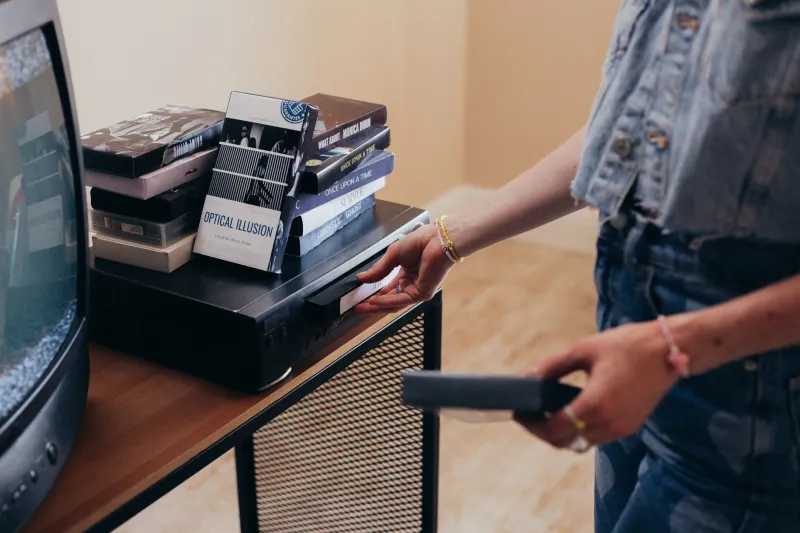
Somewhere in a glass-walled conference room, a streaming executive is pitching a reboot. Maybe it's a beloved Saturday morning cartoon. Maybe it's a mid-tier sitcom that ran for four seasons and somehow has a rabid fanbase on Reddit. Maybe it's an IP so thoroughly strip-mined that even the original creators have publicly begged everyone to stop. Doesn't matter. The algorithm says the nostalgia is good. The nostalgia always tests well.
Welcome to the Nostalgia Industrial Complex — the entertainment world's open secret, its most dependable cash machine, and arguably its most damning confession about where creativity currently stands.
The Numbers Don't Lie (Even When the Intent Does)
Let's be clear about what we're actually talking about here. This isn't just Hollywood being lazy — though, sure, some of it is absolutely that. This is a calculated, data-driven business strategy that treats collective memory like a commodity. Netflix's Stranger Things didn't just borrow 80s aesthetics for flavor; it built an entire identity around the emotional architecture of a specific generation's childhood. The show is, at its core, a delivery mechanism for feelings you already had before the first episode ever started.
And it worked spectacularly. Which told every other platform exactly what to do next.
Since then, we've gotten the Friends reunion special, Saved by the Bell revived on Peacock, iCarly resurrected on Paramount+, Beavis and Butt-Head dragged back into relevance, and more legacy sequels than anyone can reasonably track. Disney has essentially restructured its entire content strategy around the principle that you will pay monthly for the chance to revisit things you loved when you were nine. And you do. We all do. That's the part that stings.
Why the 90s? Why Now?
The 90s have become Wall Street's favorite decade for a reason that's more psychological than cultural. The people who grew up in that era — broadly, Millennials and older Gen Z — are now the ones with disposable income, streaming subscriptions, and enough accumulated stress to make a comfort watch feel genuinely necessary. Nostalgia, researchers have shown repeatedly, functions as an emotional buffer against anxiety and uncertainty. It makes people feel grounded, connected, safe.
And right now? Uncertainty is basically the national mood. Climate anxiety, economic instability, a political landscape that feels increasingly unmoored — the present is, for a lot of people, a deeply uncomfortable place to sit. So instead of sitting in it, we retreat. We rewatch The Office for the sixth time. We stream the Lizzie McGuire reboot even though we know it's not going to be as good. We buy the limited-edition cereal with the old logo on the box.
The entertainment industry didn't create this impulse. But it identified it, monetized it, and then — crucially — started amplifying it. When nostalgia becomes profitable, the incentive shifts from satisfying an existing craving to actively manufacturing one.
The Innovation Deficit Nobody Wants to Talk About
Here's the uncomfortable question buried underneath all of this: if we're spending this much energy looking backward, what exactly are we avoiding looking at?
Original storytelling still exists, obviously. It's not dead. But it's increasingly treated as a risk rather than a default. Studios and streamers are far more willing to greenlight a familiar title with built-in brand recognition than to take a genuine swing on something new. The economics make a brutal kind of sense — a reboot comes pre-loaded with an audience, a marketing hook, and a safety net of existing goodwill. An original IP has to earn all of that from scratch.
The result is a cultural landscape where the safest bet is always the past. Where a show about new ideas has to fight harder for resources than a show about old ones. Where the most-watched content on any given platform is almost always something you've already seen in some form before.
This isn't just an entertainment problem. Culture is how societies process change, imagine alternatives, and figure out who they want to become. When the dominant cultural output is a loop of recycled memory, that processing stalls. We stop rehearsing the future and start rehearsing the past instead.
The Audience Isn't Innocent Here Either
It's tempting to frame this entirely as a corporate failure — executives chasing quarters, algorithms optimizing for engagement, shareholders demanding predictable returns. And all of that is real. But the audience has agency too, even if the industry would prefer we forget that.
Every time a reboot gets a second season because the viewership numbers held, that's a signal. Every time a nostalgia-bait trailer goes viral because people are genuinely thrilled to see a beloved character return, that's a vote. The machine is responsive to what we reward, and we have been very generously rewarding this particular behavior for years.
That doesn't make anyone a bad person for enjoying a comfort rewatch or feeling a genuine surge of joy when a favorite franchise comes back. Those feelings are real and they're valid. But there's a difference between occasionally reaching for something familiar and building an entire cultural diet around it. One is self-care. The other is avoidance.
What Comes After the Reboot?
The optimistic read here is that nostalgia cycles eventually exhaust themselves. The 90s will get used up — or at least used down to a nub — and the industry will have to find something else to sell. Maybe that something else is genuine originality. Maybe it's the 2000s getting the same treatment. (God help us all.)
The pessimistic read is that we've built infrastructure — streaming libraries, IP portfolios, franchise ecosystems — specifically designed to keep the nostalgia pipeline flowing indefinitely. There's no natural stopping point when the business model itself depends on continuation.
What's clear is that the current moment represents something more than a trend. It's a symptom. The relentless mining of the recent past reflects a cultural moment where the present feels too chaotic to settle into and the future feels too precarious to project. Nostalgia fills that gap. It always has. The difference now is the scale, the precision, and the very deliberate hand guiding it.
Somewhere in another glass-walled conference room, someone is already pitching the Nostalgia Industrial Complex reunion special. It'll test well. The algorithm says so.