Ninety Minutes and Out: Hollywood Rediscovers the Movie That Ends Before 10 P.M.
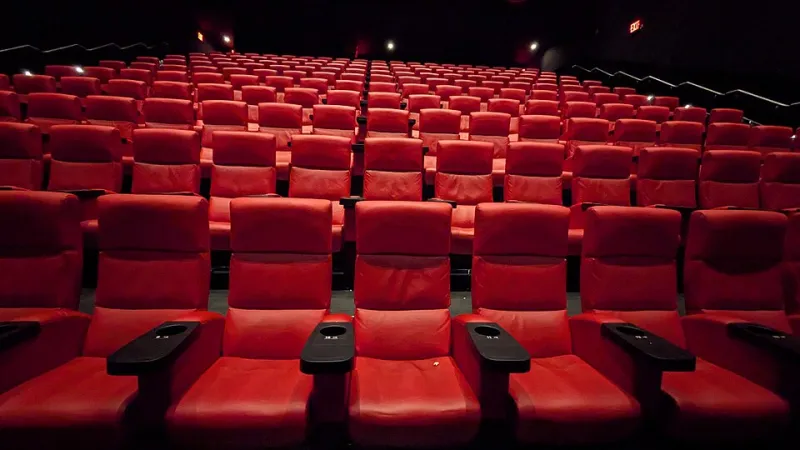
Photo: Eden, Janine and Jim from New York City, CC BY 2.0, via Wikimedia Commons
Ask anyone who has tried to catch a movie on a weeknight lately and they will describe the same logistics operation. Leave work, eat something standing up, drive to the theater, sit through twenty minutes of trailers, and then — if the feature runs two hours and forty minutes — stumble into your own driveway at a quarter to midnight with a Wednesday still ahead of you. That is a remarkable amount of overhead for a story that, more often than not, could have been told in ninety.
Hollywood appears to have noticed. Look at the 2026 release calendar and you will find a striking number of films clocking in under the hundred-minute mark: lean thrillers, tight comedies, horror movies that know exactly when to get out of the room. Not all of them are good. Almost all of them are considerate, which is a quality the industry spent the last decade treating as unserious.
The Two-Hour-Forty Tax
Somewhere in the 2010s, runtime became a proxy for importance. Awards seasons rewarded the sprawling. Streaming services learned that a long movie reads as premium in a thumbnail grid. Directors, given final cut for the first time, indulged themselves, and who can blame them. None of this was wrong on its own — some stories genuinely need room to breathe, and a good three-hour film earns every minute.
But the bloat came with a hidden cost, and that cost got paid at the ticket counter. A night at the movies is now a bundle: ticket, parking, concessions, maybe a sitter. When the AMC near you is charging eighteen dollars for popcorn, you are already negotiating with yourself before the lights go down. A three-hour runtime doesn't just ask for your money. It asks for your entire evening, and then it asks for tomorrow morning too.
A ninety-minute film, by contrast, fits. It fits between a work call and dinner. It fits a Tuesday. It fits the second date where neither of you is ready to commit to a shared emotional experience longer than a cross-country flight.
Attention Is a Budget Now
Then there is the thing nobody in a development meeting wants to say out loud: the audience's patience has not been destroyed, but it has been recalibrated. The feed trained everyone to expect a payoff in seconds. People still happily watch three-hour video essays — they just do it in twenty-minute chunks on a second monitor while folding laundry.
A tight feature doesn't fight that reality. It works with it. It says: here is a complete thing, with a beginning, a middle, and an ending, and it will be over before your brain starts reading the exit signs. That is a wildly underrated pleasure in 2026.
Brevity Is a Flex, Not a Compromise
The best argument for the short movie isn't financial. It's craft. Ninety-two minutes means every scene has a job. There's no subplot that exists so a supporting actor has something to do. There's no third act that restates the theme twice in case you were on your phone. Constraint forces decisions, and decisions are what separate a movie from a very long episode of something.
Directors who work this way tend to say a version of the same thing in interviews: the limit was the gift. Compare a lean genre picture made for twelve million dollars to a ninety-million-dollar streaming epic that spends forty minutes establishing a world it doesn't trust you to understand. One of those filmmakers respects you. Guess which one.
The Counterargument Deserves Airing
Not everything should be ninety minutes, and it would be a grim cultural landscape if every director were handed the same stopwatch. Prestige television exists because some stories need a season. Plenty of great films earn their length because the length is doing work, not because the director couldn't find the edit button.
The point isn't that long is bad. The point is that long stopped being a choice and became a default — and defaults are where laziness hides. When every project is padded to feel significant, the padding stops signaling significance and starts signaling fear.
What Actually Changes
Here is the unglamorous truth: the return of the shorter movie is not a moral victory. It is a market correction. Studios are risk-averse animals, and they are noticing that a ninety-five-minute thriller on a Wednesday can pull a crowd that a three-hour drama cannot, because the shorter film asks for less of the one thing nobody can borrow back.
If that holds, the effects ripple outward. More slots for mid-budget films. More first-time directors getting a real shot. More chances taken on premises that don't require a trilogy and an expanded universe to justify themselves.
And maybe, eventually, we get back to something like the old bargain: you give a story two hours of your life, it gives you something worth the gas money and the eighteen-dollar popcorn. No credits rolling at eleven. No fourth act. Just a good movie that knows when the hell to leave.